About the talk
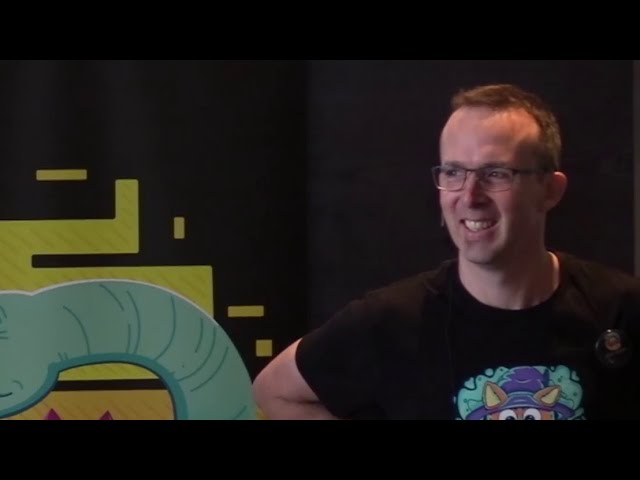
David Campey’s talk at PyCon South Africa 2023 in Durban (Friday 6 October, Main Hall, in the Teaching and Learning with Python track). It follows his 2022 talk on translating Python’s turtle into other languages, and asks a new question: can the turtle that ships with Python control real robots? The aim is to “lower the floor” into robotics, starting in simulation.
What the talk covers
- Why robots are hard to reach. Robots are expensive and fiddly, which puts them out of reach of under-resourced learners. Simulated robots need only a browser. David frames this with the ideas from MIT’s Creative Learning course: learning environments with low floors, high ceilings and wide walls, and the “loop of joy” of having an idea, struggling, and then seeing it work.
- Turtles as a metaphor. Turtles can’t climb stairs, so build ramps. They like beaches, with their smooth transition from sea to land, so beat the hard rocks into sand. They migrate and return to their source, like open-source software. Python’s turtle itself descends from Logo and the robot turtles of Seymour Papert, the South African-born MIT educator.
- A live demo. Using a free Google Colab notebook and the MuJoCo physics simulator, the audience built a simulated turtle together: ellipsoids for a body, joints and fins, then wheels with a differential drive, with videos rendered right in the browser. It ended with the turtle roaming at random. The next step is to wrap the motors in familiar
turtle.forwardandturtle.leftcommands, with sensors to know when a move is done, so a first-timer is not left driving motors for guessed numbers of seconds. - A call to action. Volunteer at a Code Dojo or Code Club near you, for example through coderlevelup.org. David points to the Raspberry Pi learning pathways (Scratch, Unity, web design, Python and physical computing), a low-cost South African physical-computing kit, and an affordable Raspberry Pi Pico robot. There is no robotics pathway yet, and he suggests building one, simulation first. The notebook is shared in a repository, open for pull requests.
Turtle-bots is where the technology side of SAPIENT’s story began: lower the floor into robotics by starting in simulation, so that anyone with a browser can take part. The same idea runs through the Mars Yard, where learners write code in the browser, try it in a simulator, and then watch it run on a real rover on Mars-like terrain. It also ties back to Code Club, the community that keeps those first steps in code within reach.